Quantum: an innovative exhibition to tell the public about Quantum Mechanics
F. Scianitti* and
C. Collà-Ruvolo*: corresponding author
Pre-published on:
December 17, 2024
Published on:
April 29, 2025
Abstract
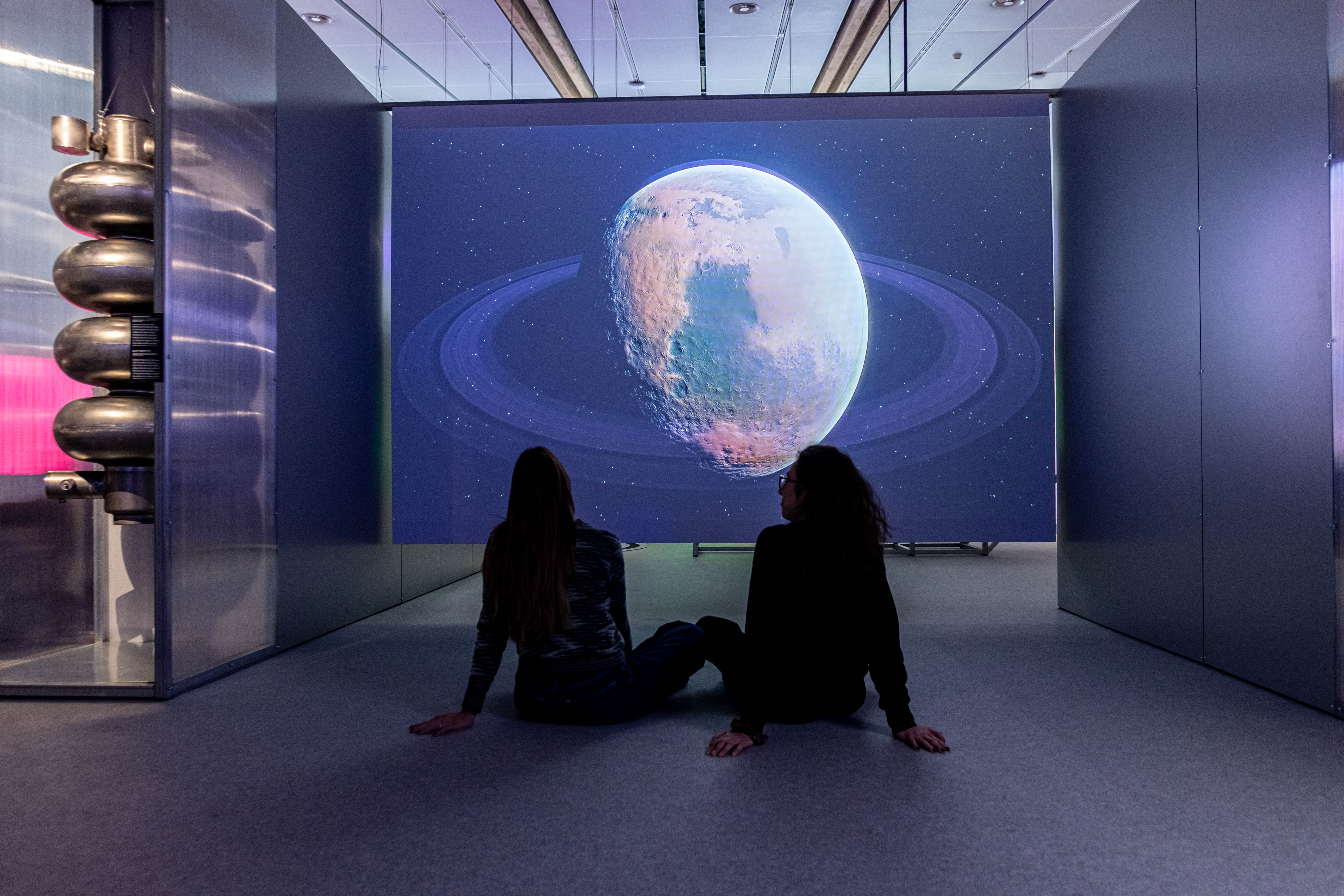
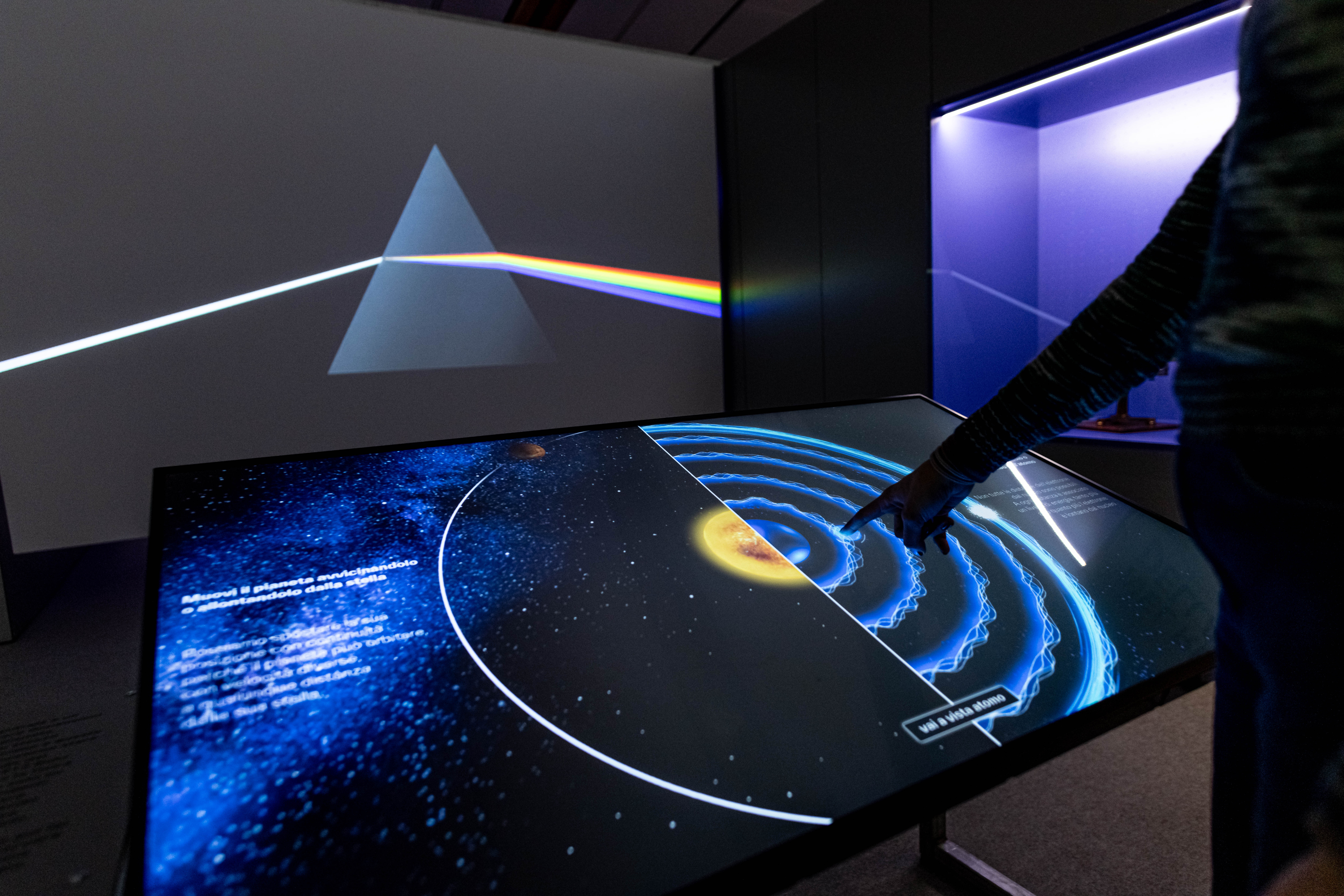
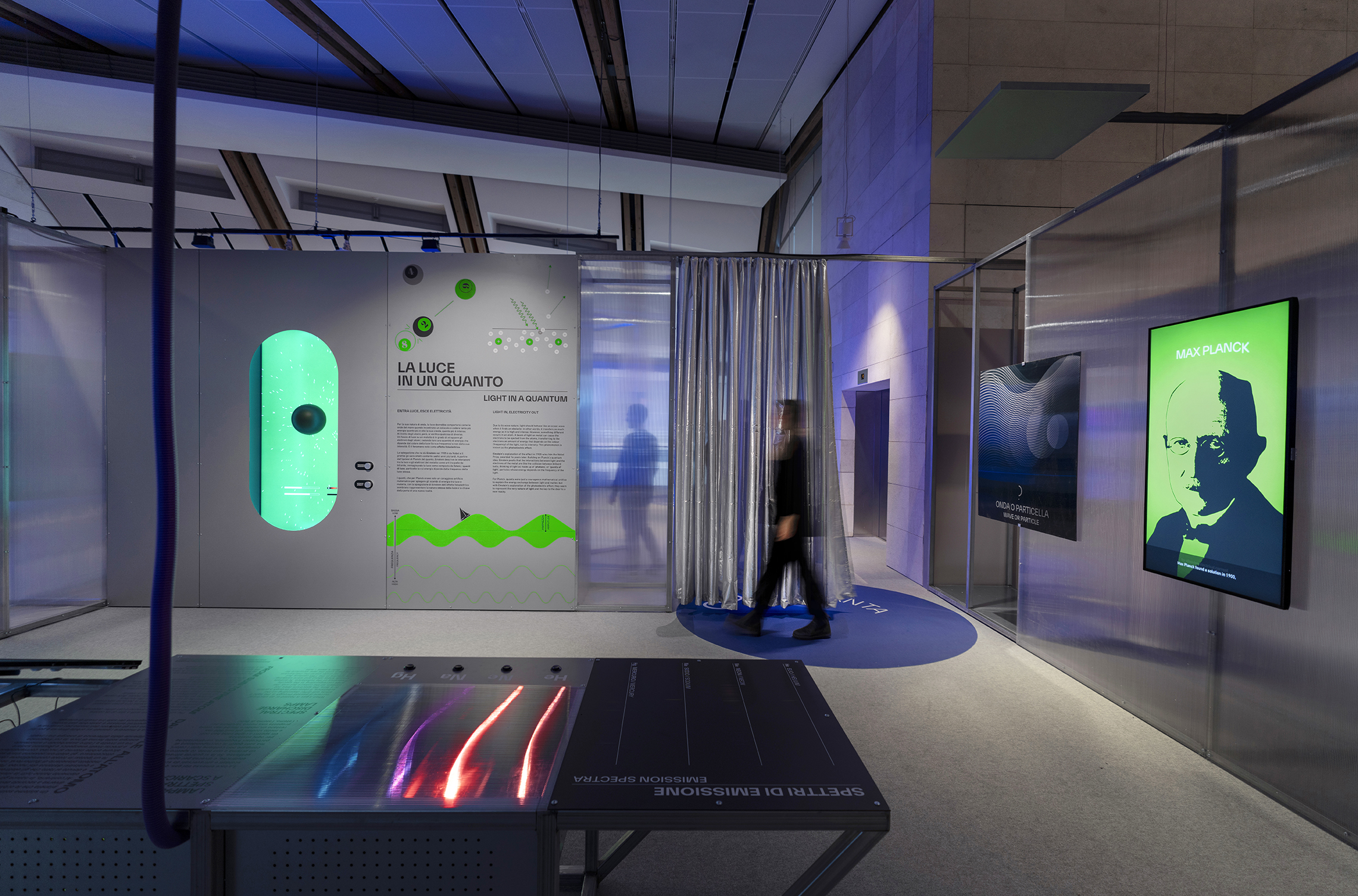
Inaugurated in December in Italy, at the Trento Science Museum (MUSE), Quantum. The evolution in one Leap is an exhibition of over 400 square meters, made up of interactive multimedia installations, texts, videos, animations, historical and scientific objects. Based on storytelling on different levels of fruition, the exhibition was created in collaboration with experts in multimedia, scenography and immersive installations, interactive exhibits, visual and sound narrations. The exhibition itinerary unfolds in five stages that combine the immersive and experiential itinerary with textual and visual narrations. To bring the public closer to such a complex topic, wide space was given to immersive and interactive elements that could both represent concepts or historical passages and immerse visitors in an evocative and experiential environment. The circular narration has its starting point coinciding with the point of arrival: from the macrocosm of the human dimension to the macrocosm of celestial bodies. The aim was to lead visitors through the change of perspective that the investigation into the microcosm of atoms forces us to, finally bringing them back to a dimension, the universe of large dimensions, in which classical physics intertwines with the large-scale manifestations of Quantum Mechanics. The central part of the exhibition focuses on the story of the debate between scientists on the interpretations of Quantum Mechanics and on quantum technologies like quantum computers, quantum devices, cryptography. In this paper we will focus on this specific narrative structure, on the innovative interactive installations that we have designed for the exhibition to explain the founding concepts of quantum mechanics - the discrete structure of the atom, the photoelectric effect, the double slit experiment, the concepts of wave function and superposition of states - and on the theatrical narration created through projections and choral videos.
DOI: https://doi.org/10.22323/1.476.1169
How to cite
Metadata are provided both in
article format (very
similar to INSPIRE)
as this helps creating very compact bibliographies which
can be beneficial to authors and readers, and in
proceeding format which
is more detailed and complete.


 Copyright owned by the author(s) under the term of the Creative Commons Attribution-NonCommercial-NoDerivatives 4.0 International License.